
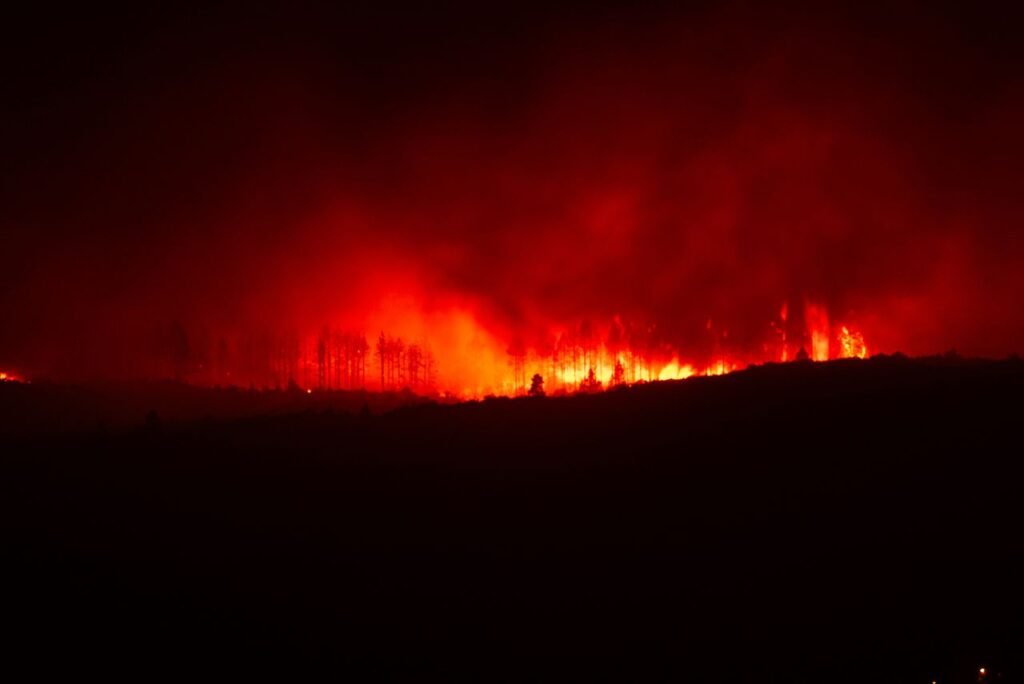
Wildfires are no longer a seasonal problem at the edge of summer; they are becoming a recurring crisis shaped by hotter, drier and more volatile conditions, with France and Spain among the places hit hardest this month. Recent reporting says more than 300,000 people have been evacuated in France and Spain as fires have threatened areas near Bordeaux and Madrid.
What is happening now
The current fires in south-west Europe have forced mass evacuations, strained emergency services and disrupted transport, including road and rail links near Bordeaux. Reports also describe the blazes as unusually severe, with officials calling the scale unprecedented and firefighters warning that some fires may take months to fully extinguish. Beyond France and Spain, wildfires have also been reported across other parts of southern Europe this summer, underlining that this is a regional pattern rather than an isolated event.
Why wildfires are rising
The main driver is climate change, which is intensifying heatwaves, drought and “fire weather” conditions that make ignition more likely and fires harder to control. In Europe, a wet winter can fuel rapid plant growth, then successive heatwaves can dry that vegetation into tinder, creating ideal conditions for large fires. Land-use factors also matter: rural depopulation, accumulated fuels and fragmented land management can leave landscapes more vulnerable to fast-spreading fires.
What helps in the short term
In the immediate term, the priorities are rapid detection, evacuation, firefighting capacity and public protection. Governments are already using air tankers, military support, firebreaks and cross-border assistance, while authorities in France and Spain have mobilised large emergency responses. Practical short-term measures also include closing high-risk roads and rail lines, issuing health warnings for smoke, and protecting people with respiratory or cardiovascular vulnerabilities.
What must change long term
Longer-term, the answer is to reduce the heat and fuel conditions that make extreme fires more likely. That means cutting greenhouse gas emissions, because warmer temperatures and more frequent droughts are making fire seasons longer and more intense. It also means better land management: targeted fuel reduction, prescribed burning where appropriate, restoring more resilient landscapes, improving emergency access and designing settlements with wildfire risk in mind.
If nothing changes
If we keep treating wildfires as a one-off emergency instead of a structural risk, the costs will compound. The health burden will rise through smoke exposure, which is linked to premature deaths, hospital admissions and wider economic losses. There is also a broader systemic risk: more fires mean more pressure on public budgets, infrastructure, food systems, ecosystems and insurance markets, while each major fire can feed back into climate and landscape degradation, making the next fire more likely.
A clear way forward
The most credible response is a two-track approach: stronger preparedness now, and deeper climate and land-use reform over the next decade. Europe’s policy direction is already shifting towards prevention, preparedness and fire-resilient landscapes, but those goals need sustained investment rather than emergency spending alone. In plain terms, the choice is between managing a growing risk intelligently, or allowing extreme fire seasons to become the new normal.
Sources
- Al Jazeera: Wildfires in southwest Europe: What we know so far
- BBC: Devastating European wildfires in maps – and how they’re being tackled
- BBC live coverage of France and Spain wildfires
- IPCC AR6 WG1, Chapter 11
- EEA policy brief: Reducing wildfire risk in Europe
- European Commission: Commission launches new strategy to tackle rising wildfire threat