
The first half of 2026 has been a study in contradiction. While governments, institutions and global forums have delivered meaningful progress on oceans, disclosure and social inclusion, the physical realities of climate change and political backsliding have continued to test the credibility of the sustainability agenda.
This matters because sustainability is no longer just a question of ambition. It is now a test of resilience, consistency and whether policy, finance and society can keep pace with the speed of environmental change. H1 2026 made that tension unmistakably clear.
Five positive sustainability events
1. The High Seas Treaty finally entered into force

In January, the High Seas Treaty came into force, marking a major milestone for ocean governance. It created a global framework to protect biodiversity in international waters, strengthen marine conservation and improve oversight of human activity beyond national jurisdictions.
For sustainability professionals, this is a landmark moment. Oceans are central to climate regulation, food systems and biodiversity, and this agreement gives the world a stronger legal basis for protecting them.
2. The UK moved forward on sustainability reporting
In February, the UK published its final Sustainability Reporting Standards. This was an important regulatory signal for EMEA, especially for companies preparing for more structured and comparable climate and sustainability disclosure.
Even though the standards were initially voluntary, the direction of travel is clear. Regulation is tightening, expectations are rising and companies that wait too long may find themselves scrambling to catch up.
3. Global climate and development dialogue gained momentum in APAC
The UN’s Climate and SDGs conference in Bangkok gave Asia-Pacific a significant platform to connect climate action with sustainable development. That kind of integration is increasingly important, because climate, nature, inequality and finance are no longer separate policy silos.
The event reflected a broader shift in APAC: sustainability is being framed less as a reporting exercise and more as a development imperative.
4. World Environment Day 2026 sharpened global attention on pollution and nature
World Environment Day 2026, hosted in Azerbaijan, kept climate resilience, ecosystem protection and pollution reduction in the spotlight. These annual moments matter because they help sustain public and political attention beyond the usual policy cycles.
In a year already marked by environmental disruption, the message was timely: nature-based action and pollution control remain fundamental to any serious sustainability strategy.
5. Women Deliver 2026 elevated social sustainability
Held in Melbourne, Women Deliver 2026 brought gender equality, women’s rights and social inclusion to the forefront. This was an important reminder that sustainability is not only environmental; it also depends on fairness, access and the distribution of risk and opportunity.
That social dimension is often underplayed in corporate sustainability discussions, yet it is essential. A sustainable future cannot be built on environmental progress alone.
Five negative sustainability events
1. The US retreat from international climate cooperation
One of the most concerning developments in early 2026 was the United States’ withdrawal from key international climate and science-related bodies. Whatever the domestic political rationale, the signal to the rest of the world was damaging.
International climate action depends on coordination, trust and continuity. When a major North American power steps back from that system, it weakens global momentum at exactly the wrong time.
2. Wildfires surged to record levels
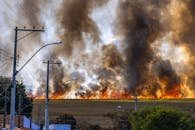
By May, reports indicated that more than 150 million hectares had burned globally in the first months of the year. That is a staggering amount of land, with serious consequences for ecosystems, air quality, livelihoods and carbon storage.
The fires affected multiple regions, including Africa, Asia, North America and Australia. This was not a localised crisis; it was a global warning sign.
3. Fire risk hit Europe harder and earlier
EMEA also faced worsening wildfire conditions, especially in southern and western Europe. Heat, dryness and shifting weather patterns combined to make fire seasons more dangerous, more expensive and harder to manage.
This is a reminder that climate risk is not abstract. It shows up in emergency response costs, public health strain, damaged ecosystems and pressure on insurers, governments and businesses.
4. Climate-driven pollution worsened public health risk
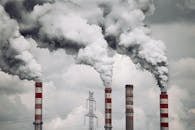
New analysis in February showed that extreme weather can worsen toxic air pollution from industrial sites. This matters because it links climate disruption directly to local environmental justice concerns.
When weather events amplify industrial pollution, the result is a double burden for nearby communities. The people most exposed are often those with the least protection.
5. Social vulnerability remained closely tied to climate exposure
The social side of sustainability was also visible in the uneven way climate impacts were felt across communities. Heat, smoke, flooding and disaster exposure continue to hit lower-income and marginalised groups hardest.
That is why social sustainability cannot be treated as a separate issue. Climate resilience, labour conditions, public health and equality all reinforce one another.
What H1 2026 tells us
The clearest lesson from H1 2026 is that sustainability progress is real, but fragile. Regulation is advancing in some places, and major global frameworks are strengthening, yet physical climate risk and political reversal continue to offset those gains.
For companies, investors and policymakers, the implication is simple: sustainability has become a systems challenge. Environmental action, social protection and regulatory readiness now need to move together, not one after the other.
Sources
- UN News: High Seas Treaty enters into force
- BIMCO: High seas agreement to enter into force in January 2026
- IAS Plus: Final UK Sustainability Reporting Standards published
- GOV.UK: UK Sustainability Reporting Standards
- UN: Climate SDGs Conference 2026
- UNEP: World Environment Day 2026 theme and host
- Women Deliver 2026
- Climate Action Network: US withdrawal from UNFCCC-related cooperation
- DW: Wildfires and climate extremes in 2026
- Down To Earth: Record wildfires in 2026
- EDF: Climate-driven weather events and toxic air pollution